



In the spring of 2021, as West Bengal braced itself for one of the most polarising assembly elections in recent history, I returned from Delhi to cast my vote. The pandemic was at its peak, and the city carried a palpable sense of unease – of both disease and politics. That unease surfaced most vividly in an unlikely place: the backseat of an Uber cab.
My driver that day was a middle-aged man named Rafiq Ali. His voice carried both exhaustion and conviction, as though he had repeated the same conversation many times. Curious about the atmosphere of the election, I asked him how he felt about the political climate in Bengal. His reply was blunt: “The BJP is trying to finish our community. If they come to power, they will send us to Bangladesh. We are scared of the CAA.”
The Citizenship Amendment Act (CAA), passed in 2019, had become one of the most contentious political issues in Bengal. I gently pointed out that the law did not, in principle, strip Indian Muslims of their citizenship. Yet Rafiq shook his head. “Today it is CAA. Tomorrow it will be NRC. After that, something else. All they want is to isolate us.”
For him, the legal text of the CAA mattered far less than the political intent he read into it. His fear was not of the law as it stood but of the trajectory it represented.
I pressed further: If Muslims in Bengal were so deeply apprehensive of the BJP, did that mean they supported Mamata Banerjee wholeheartedly? His answer revealed a far more complex political calculation. “I don’t know why people say Mamata is pro-Muslim. Look at the violence across Bengal. In many cases, it is our community that has suffered. We are nothing but a vote bank. Still, what choice do we have?”
Rafiq paused at a traffic signal, and his frustration spilt out. “We cannot vote for the BJP. And if we look at the Left, what do we see? A party that cannot even protect its own workers, let alone a community as large as ours. So, we vote for Didi – not because we admire her, but because she is the only one who can stop the BJP.” It was a reluctant loyalty, born less of ideological alignment and more of existential fear. Mamata Banerjee, for Rafiq, represented a defensive wall against the tide of Hindutva. Yet that wall was not beyond criticism. He spoke of corruption, of scams, of everyday violence that left many in his community disillusioned. “If tomorrow there is a leader who can stop the BJP and also end these scams and violence, we will vote for that leader,” he concluded with quiet certainty.
That ride through Kolkata’s congested lanes left me with a lasting impression. In Rafiq’s words lay the dilemma of Bengal’s Muslims in 2021: trapped between fear of exclusion and disappointment with those who claimed to protect them. Politics, in that moment, was not about choice – it was about survival.
From 2016 onwards, the political landscape of West Bengal underwent a significant transformation as the BJP sharpened its campaign against the ruling TMC. The BJP, seeking to establish itself as a formidable force in a state long dominated by the TMC and previously the Left Front, adopted an aggressive narrative that often centred on communal issues. This period marked a noticeable rise in tensions between Hindu and Muslim communities, fuelled by political rhetoric and strategic mobilisation. The BJP’s approach frequently involved targeting the Muslim community through provocative speeches and actions, framing the TMC’s policies as appeasement of minorities, particularly Muslims, to consolidate its Hindu voter base.
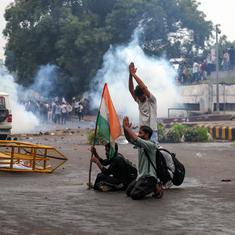
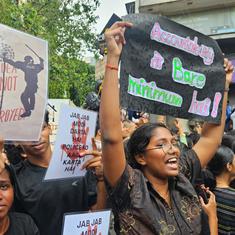
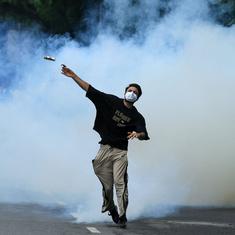
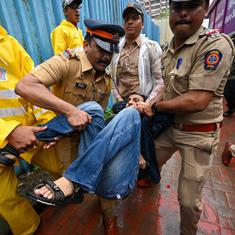
This strategy not only deepened communal divides but also set the stage for recurring episodes of violence, which both parties exploited to advance their political agendas. The escalation of communal tensions was evident in the increasing number of reported incidents of violence.
According to the National Crime Records Bureau (NCRB), West Bengal recorded 27 communal riots in 2015, resulting in five deaths and 84 injuries. This was a significant jump from the 16 incidents reported in 2014, signalling a troubling trend. By 2017, the situation had worsened dramatically, with the NCRB documenting 58 incidents of communal violence, leading to nine fatalities and 230 injuries. These clashes were particularly concentrated in border districts such as Murshidabad, Malda and North 24 Parganas, where demographic diversity and cross-border dynamics with Bangladesh added complexity to local tensions. Muslim-majority areas, in particular, became flashpoints, with incidents often sparked by religious processions or disputes over cultural practices. The BJP capitalised on these events, portraying them as evidence of the TMC’s failure to maintain law and order, while alleging that the state government’s policies favoured Muslims at the expense of Hindus. Conversely, Muslim communities increasingly suspected BJP involvement in instigating unrest, either through provocative actions or by amplifying divisive narratives.
The BJP’s strategy extended beyond rhetoric to the active promotion of Hindu festivals as platforms for political mobilisation. Ram Navami, traditionally a minor festival in West Bengal compared to Durga Puja, emerged as a significant point of contention starting in 2016. The BJP and its affiliated organisations, such as the Vishva Hindu Parishad (VHP) and Bajrang Dal, began organising large-scale Ram Navami processions across the state. These events were marked by displays of swords, tridents and other weapons, accompanied by slogans that were often perceived as provocative by Muslim communities. In 2018–19, for instance, processions in areas like Howrah and Asansol saw participants brandishing arms, leading to clashes that heightened communal tensions. Reports from that year noted that such processions deliberately passed through Muslim-dominated neighbourhoods, escalating the potential for conflict. Mamata Banerjee, in response, repeatedly called for peace and urged communities to avoid provocation, but her appeals often fell short in the face of charged atmospheres. The TMC accused the BJP of orchestrating these events to polarise voters, while the BJP countered by alleging that the TMC restricted Hindu religious freedoms, citing instances like the state’s decision to regulate Durga Puja idol immersions to avoid clashing with Muharram processions in 2016 – a move that drew criticism from the Calcutta High Court for appearing to favour one community over another.
In a conversation with me, Shyamal Dasgupta, a 47-year-old bank employee from Howrah, reflected on the changes he has witnessed in his locality. “First of all, in our area, at least, I am born and brought up here, so is my wife, and my parents have been staying here since the 1950s – we have never seen such Ram Navami processions,” he said. According to him, the sudden rise of these aggressive celebrations is directly linked to the BJP’s political presence in Bengal.
Dasgupta identifies as a Hindu but made it clear that his discomfort lies not with the festival itself but with the confrontational nature of the processions. “I have no problem with any celebration, but why instigate Muslims? The BJP and their supporters deliberately play Jai Shree Ram songs and raise slogans in front of our local mosque. This is unnecessary.” His concern is that such acts, far from fostering harmony, are deliberately designed to provoke the Muslim community.
He added that these actions have triggered repeated clashes between Hindus and Muslims, creating a climate of unease. “I do not know if this is helping the BJP politically or not, but the atmosphere of fear is increasing among the Muslims which is indeed helping the TMC,” Dasgupta observed.
The judicial response to these incidents further underscored the political tug of war. The BJP frequently approached the Calcutta High Court, seeking investigations by central agencies like the Central Bureau of Investigation (CBI) or the National Investigation Agency (NIA) into cases of communal violence. Several notable cases reflect this pattern. In 2023, riots in Howrah and Hooghly during Ram Navami celebrations prompted the Calcutta High Court to order an NIA probe, with a fact-finding committee concluding that the violence was “pre-planned, orchestrated, and instigated”.
These judicial interventions were often celebrated by the BJP as victories against the TMC’s alleged bias, while the TMC argued that such probes were politically motivated to undermine its authority. The communal polarisation had a profound impact on West Bengal’s Muslim community. Until 2016, Muslim voters were a diverse bloc, with significant support for the TMC but also substantial backing for the Left Front and Congress, particularly in rural areas. However, the BJP’s aggressive Hindu nationalist rhetoric post 2016 instilled a growing sense of insecurity among Muslims. The Left and Congress attempted to position themselves as alternatives, condemning both the TMC and BJP for fanning communal discord. They argued that the TMC’s occasional engagement in what has been termed “soft Hindutva” – such as organising Hanuman Jayanti celebrations to counter the BJP’s narrative – contributed to the divisive atmosphere.
Despite these efforts, the Muslim community increasingly gravitated towards Mamata Banerjee, viewing her as a bulwark against the BJP’s perceived anti-Muslim agenda. Her public statements condemning violence and her refusal to implement Central policies like the Waqf (Amendment) Act in 2025, which sparked further unrest in Murshidabad, reinforced this perception. The Murshidabad violence of 2025, which claimed three lives and displaced hundreds, was described by Banerjee as a “pre-planned” conspiracy, with accusations levelled against the BJP and even the Border Security Force (BSF) for exacerbating tensions.
In my interaction with the West Bengal State Jamiat-e-Ulama’s general secretary, Mufti Abdus Salam Qasmi, he expressed deep concern over the rhetoric used by the BJP towards Muslims. He argued that the language employed by BJP leaders, from the national level down to grassroots workers, is not only offensive but also calculated to serve a political purpose.
“The kind of language the BJP leaders use against the Muslims, from the top-most level to the ground-level leaders, is not only disrespectful but also clearly done in view of pushing their own agenda,” Qasmi told me. According to him, the BJP’s politics deliberately seeks to demonise them. “Today, Muslims want justice and security because indeed they are scared. The BJP is openly scaring us,” he said, drawing attention to instances of atrocities against Muslims in other states. For example, in recent years, several incidents of violence against Muslims in India have drawn national attention. In Haldwani, Uttarakhand (2024), six people were killed after police demolished a madrasa and mosque, triggering riots and mass displacement. In Sambhal, Uttar Pradesh (2024), clashes during an Archaeological Survey of India inspection of a mosque left five Muslims dead. In Nagpur, Maharashtra (2025), communal violence over Aurangzeb’s tomb caused injuries and demolitions of Muslim properties. Each case reflected escalating communal polarisation and alleged state bias.
Qasmi added that similar attempts were made in Bengal, but the state’s Muslims have remained cautious and politically aware. “Look at the kind of atrocities that take place against Muslims in other states. In Bengal also they tried the same. But Bengal’s Muslims know very well what is good for them and they decide accordingly.”
The BJP, in turn, used Banerjee’s stance to further its narrative of TMC’s minority appeasement, accusing her of shielding perpetrators of violence to secure Muslim votes. This was particularly evident in the aftermath of the 2025 Murshidabad riots, where BJP leaders claimed that over 400 Hindu families were forced to flee, alleging police inaction under Banerjee’s leadership. The TMC countered that the BJP was exploiting the situation to stoke communal fears ahead of the 2026 state elections. This cycle of accusation and counter-accusation deepened the polarisation, with both parties engaging in what analysts have described as “competitive communalism”.
The TMC’s efforts to balance its appeal to Muslim voters while retaining Hindu support often placed it in a precarious position, as seen in incidents like the 2017 controversy over Durga Puja immersions, which the BJP framed as evidence of favouritism towards Muslims. The communal tensions in West Bengal during this period were not merely spontaneous but were deeply intertwined with political strategies. The BJP’s rise in the state, from a marginal player to the main opposition by 2019, was fuelled by its ability to tap into Hindu anxieties, particularly in border areas where issues like infiltration were contentious. Meanwhile, the TMC’s responses, including Banerjee’s vocal opposition to Central policies and her appeals for communal harmony, were seen by critics as pragmatic moves to consolidate her core voter base. The Left and Congress, while vocal in their criticism of both parties, struggled to regain ground as the communal narrative overshadowed their secular rhetoric.
Political scientist Sibaji Pratim Basu believes Bengal’s Muslim community continues to back Mamata Banerjee primarily because of the larger political environment in the country. He tells me, “The Muslims of Bengal have nowhere to go in terms of the fact that the kind of political party in power at the Centre and their policies are often seen as being against minorities.” In such a situation, he explains, the search for safety and security becomes the foremost concern for the community.
Basu points out that Mamata has successfully projected herself as the protector of minorities in Bengal. “The Muslims will want security and in Bengal Mamata is providing that security to them. Therefore, they will keep supporting Mamata,” he says. This sense of protection outweighs any dissatisfaction with her government’s performance on other fronts, such as development or governance.
According to Basu, the loyalty of Bengal’s Muslims is not rooted only in political patronage but in a much deeper question of survival and identity in an increasingly polarized national climate. As long as Mamata Banerjee maintains her image as a shield against marginalisation, Basu argues, Muslims in Bengal are unlikely to abandon her leadership.
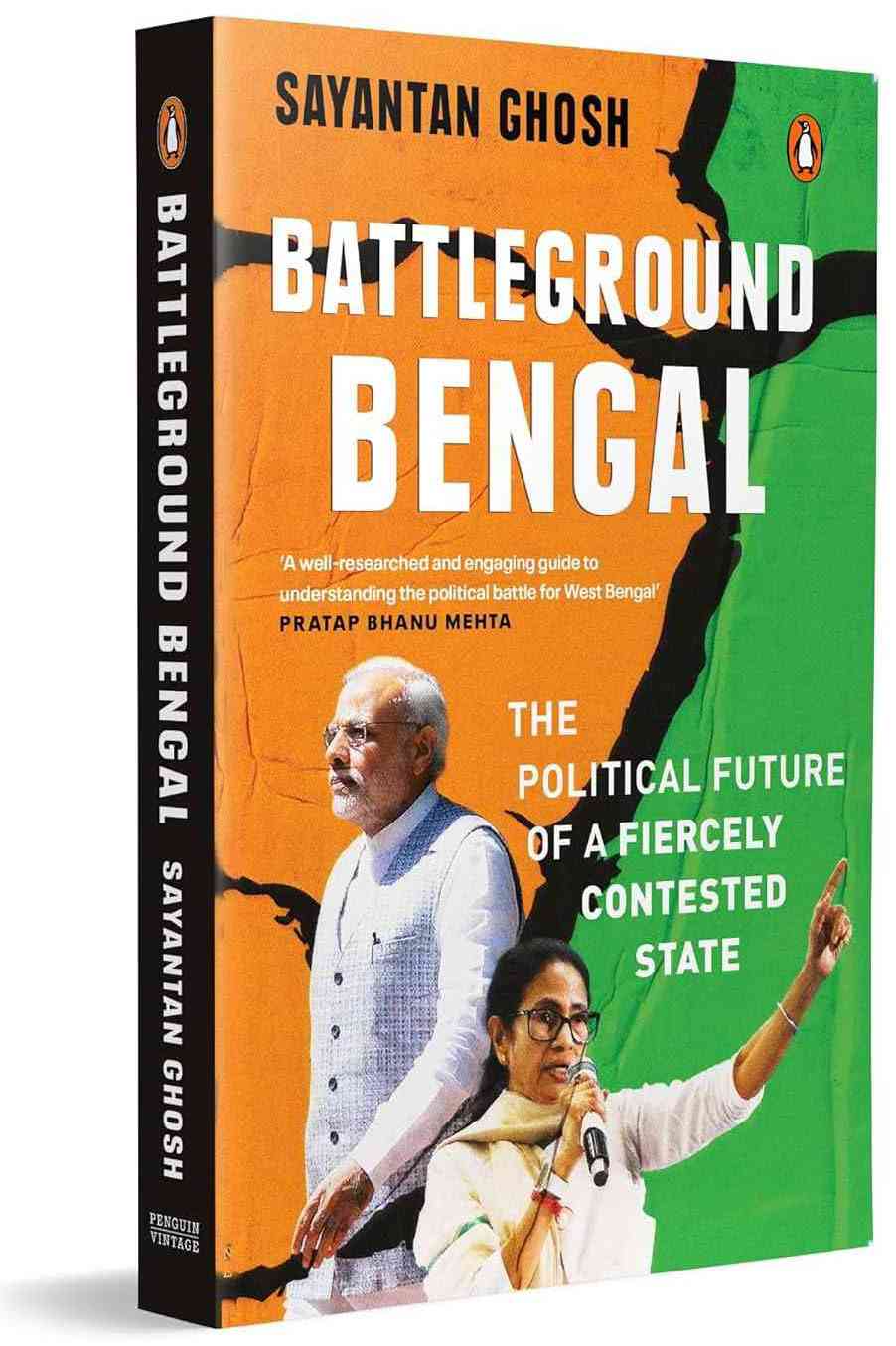
Excerpted with permission from Battleground Bengal: The Political Future of a Fiercely Contested State, Sayantan Ghosh, Penguin India.
